
Chapter 1:
Is Eschatology Optional?
The idea is common today that the whole subject of eschatology is a luxury option on the automobile of Christianity. A little thought, I think, will expose the superficiality of such a view. The Bible is most fundamentally the story of redemption. Eschatology is the doctrinal topic which focuses on last things. In other words, it focuses on the end of the redemptive story. The notion that eschatology is optional would lead—and must lead—to the conclusion that it does not matter how the redemptive story ends! Even with stories that are not divine—the fictional stories of popular literature and movies—everything depends on how the story ends! The meaning of the story is profoundly influenced by how the story ends! How could it not be the same with the redemptive story? The whole meaning of the redemptive story depends on how the story ends. How the redemptive story ends cannot, then, be unimportant. And this means that eschatology cannot be unimportant or optional for the Christian.
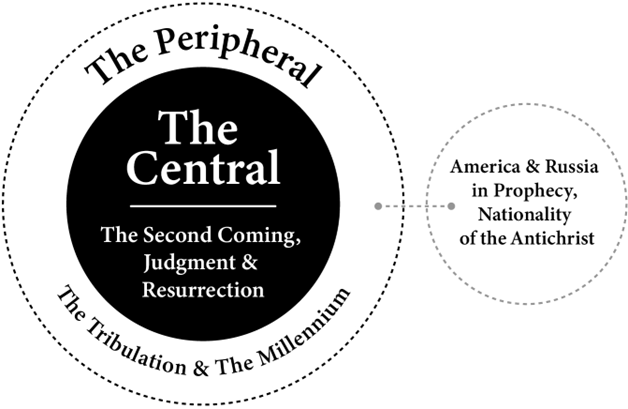
Of course, all this is not to say that everything on which the pop- ular mind fixates with regard to the doctrine of last things is important. Indeed, some discussions about prophecy have little or nothing to do with the Scriptures or the Christian faith. When I say this, I think, for instance, of the long discussions I overheard as a youth about America or Russia in prophecy and the nationality of the antichrist.
There are, however, some arguments about prophecy that are worth having and involve important issues like the relation of the second coming of Christ to the tribulation and the millennium. These important arguments still occur among Christians, and differences over them are no reason in themselves to question someone’s faith. However, some prophetic issues lie at the core of the Christian faith. The second coming, the judgment, and the resurrection are at the heart of biblical prophecy and are essential to the Christian faith.
It is, however, one thing to say or affirm the centrality of these eschatological doctrines, but it is another thing to prove it. How can we prove that some prophetic issues are foundational and essential—at the necessary core of the Christian faith? I want to argue for the thesis in this chapter that the literal (bodily and public) second coming of Christ, together with the events of the resurrection and judgment immediately associated with it, are core issues of the Christian faith. Fundamental disagreement about these issues ought not to be regarded as unimportant but should lead to a breaking of Christian fellowship with those who refuse to repent of denying these core truths.
Light on this issue of what in prophecy is foundational (and what is not) may be had from three sources. We will look in order at the prophetic issues that are central (1) logically, (2) scripturally, and (3) confessionally.
Logically Central Prophetic Issues
Despite all the differences between the tribulational and millennial views, they all still hold something in common: the doctrine of the (literal) second coming of Christ.
Consider the debates among Christians about the relation of the second coming of Christ to the tribulation and millennium. Hidden in the hotly debated differences about the relation of the coming of Christ to the tribulation is a great unifying truth. Christians argue about whether Christ’s coming is “pretribulational,” “posttribulational,” “midtribulational,” or “prewrath,” but they do not disagree that Christ’s future coming is a reality. Christians warmly dispute whether Christ’s coming is postmillennial, premillennial, or amillennial. They do not, however, dispute whether Christ is actually coming back. Thus, though these viewpoints disagree emphatically about the relation of the second coming to the tribulation and millennium, hidden in all this disagreement
is a great core confession. All the different tribulational and millennial views hold in common the doctrine of the second coming. It is the core truth about which all agree.
The following diagram illustrates how this logical analysis assists us in seeing what is central and what is peripheral or secondary to the Christian faith.
Scripturally Central Prophetic Issues
Introduction: The Central and the Peripheral
Just as some things seem to be logically central and logically peripheral in the debates among Christians, so also some things appear to be scripturally central and others peripheral. Everything the Bible teaches is important, but not everything the Bible teaches is equally important or vital to the Christian faith. Here is an extreme and silly illustration of this concept. The Bible teaches that there is one God and that Jesus is His eternal Son. The Bible also teaches that there was a giant with twenty-four digits—six on each of his hands and feet (2 Sam. 21:20). But no one has any doubt about which teaching is most central or important to the message of Christianity.
Of course, denying that there was a giant with 24 fingers and toes is not without significance. If this denial is based on a denial of biblical authority, it would be very consequential and even heretical. These important consequences are, however, not based on the centrality of twenty-four-digited giants for the Christian message. They are based rather on the foundational nature of biblical authority.
What puts this matter (of some teachings of the Bible being more central than others) beyond doubt is a distinction made by the Bible itself. It clearly teaches that some of its teachings are more basic than others. Note the following passages:
“Teacher, which is the great commandment in the Law?” 37 And He said to him, “‘YOU SHALL LOVE THE LORD YOUR GOD WITH ALL YOUR HEART, AND WITH ALL YOUR SOUL, AND WITH ALL YOUR MIND.’ 38 This is the great and foremost commandment. 39 The second is like it, ‘YOU SHALL LOVE YOUR NEIGHBOR AS YOURSELF.’ 40 On these two commandments depend the whole Law and the Prophets.” (Matt. 22:36–40, italics added)
11 Concerning him we have much to say, and it is hard to explain, since you have become dull of hearing. 12 For though by this time you ought to be teachers, you have need again for someone to teach you the elementary principles of the oracles of God, and you have come to need milk and not solid food. 13 For everyone who partakes only of milk is not accustomed to the word of righteousness, for he is an infant. 14 But solid food is for the mature, who because of practice have their senses trained to discern good and evil. 1 Therefore leaving the elementary teaching about the Christ, let us press on to maturity, not laying again a foundation of repentance from dead works and of faith toward God, 2 of instruction about washings and laying on of hands, and the resurrection of the dead and eternal judgment. (Heb. 5:11–6:2, italics added)
These passages do not indicate that the secondary or less central issues are unimportant or optional. In Matthew 22:40 the two great commandments are summaries of the whole Law and the Prophets. One can scarcely say that the rest of the Law and the Prophets is unimportant. In Hebrews 5:11–6:2 the other teachings are associated with maturity and have to do with a deeper understanding of the work of Christ as priest.
No one should think that the Melchizedekian priesthood of Christ is optional or unimportant. Nevertheless, in both these passages there is a clear recognition that some things are more central or basic than other things to the Christian message. Some truths are more peripheral and have more to do with the superstructure of Christian doctrine.
The Centrality of the Second Coming of Christ to Judgment
The Return of Christ Is a Literal / Historical / Physical Event
The modern scientific mindset tends to spiritualize or under- stand figuratively all things religious and spiritual. It is important to note in such a climate that Christ’s return is clearly not (merely) a spiritual event and certainly not a figurative event. It is a literal, historical, and physical expectation. This affirmation is supported by the following arguments:
- Like His departure, Christ’s return is bodily (Acts 1:11).
- As His departure means His physical absence from earth, so His return means His physical return (Acts 3:20–21).
- His return is described as including a certain, clear order of events. There is, first, His descent from heaven. There is, second, the resurrection of dead believers. There is, third, the transfor- mation of living believers (1 Thess. 4:14–17).
- Christ’s return is the pivotal event in a series of events that the Bible describes as literal, historical, and physical. It is an event like the physical creation of the world, the worldwide flood, the bodily resurrection of Christ, the bodily resurrection of all the dead, the physical destruction of the world, and the renewal of the physical creation (Gen. 1:1–2:3; 2 Peter 3:5–7; John 5:28–29; 20:1–21:25; 2 Peter 3:10–12; Rom. 8:19–23).
For all these reasons we must think of Christ’s return as a literal, historical, and physical event that will take place in the future. When some in our day (calling themselves “full preterists”) deny such a second coming, they fly in the face of not only many explicit New Testament texts but the whole tenor of the Bible.
The Return of Christ Is a Public / Universal / Open Event
Another major emphasis of the NT is that Christ’s return will not be secret, but universally visible and public. It would be possible in the abstract to think of a physical return that was secret, but the Bible everywhere teaches that the day of Christ’s humiliation is over and the day of His glory has come. Thus, it would be unthinkable for His return to go unnoticed. This general consideration is confirmed by a number of explicit New Testament passages (Luke 17:22–25; 1 Thess. 4:16–17; 2
Thess. 1:5–10; Titus 2:13). Matthew 24:26–27 epitomizes and articulates that Christ’s coming will not be secret: “So if they say to you, ‘Behold, He is in the wilderness,’ do not go out, or, ‘Behold, He is in the inner rooms,’ do not believe them. For just as the lightning comes from the east and flashes even to the west, so will the coming of the Son of Man be.”
The Denial of This Return of Christ Is a Damnable Doctrine
Because the denial of the return of Christ is a damnable doctrine, Peter describes those who deny the second coming of Christ as mockers (2 Peter 3:3–4; cf. Jude 18). To describe someone as a mocker is to mark him not merely as one who is not a Christian but as one who is the worst type of unbeliever. Though the same word is not used, the same concept is present in Proverbs when it contrasts the naïve with the scoffer (Prov. 1:22; 9:7–8; 15:12; 19:25; 21:11, 24). Thus, when Peter identifies those who deny the second coming as mockers, he makes clear that they have departed from the Christian faith and that the second coming of Christ is a central Christian doctrine.
A similar curse is placed upon those who reject the truth of the second coming by John in the book of Revelation. There are, of course, a number of debatable passages in the book of Revelation, but its central message is clear. It is that Jesus is to return in judgment to the world (Rev. 1:7; 21:12, 20). Revelation’s clear and central message must certainly be in mind when John pronounces the curse upon those who take away from the message that he had been given by Jesus (Rev. 22:18–19). The fearsome character of this curse makes clear, then, how central to the Christian faith is the return of Christ to this world.
The Centrality of the Bodily Resurrection of Believers
The Bible teaches that part of the final judgment is that all men will be raised from the dead literally and bodily. The three classic witnesses to it are Daniel 12:2, John 5:28–29, and Acts 24:15. Especially important, however, is the promise of the resurrection of Christ’s people. This promise is closely linked in many places with the bodily return of Christ (1 Cor. 15:23; 1 Thess. 4:13–17; 2 Thess. 2:1). This is a doctrine that, like the return of Christ, is taught literally dozens of times in the Bible.
In 1 Corinthians 15, Paul defends the doctrine of the bodily resurrection of believers throughout the entire chapter. He clearly thinks that denying the resurrection of believers is denying the gospel of Christ itself (1 Cor. 15:12–19). The gospel of Christ is the very basis of our salvation, so denying the resurrection is to place ourselves outside the sphere of salvation. It is the gospel by which we must be saved (1 Cor. 15:1–2). The resurrection is, thus, closely linked to the resurrection of Christ. His resurrection is the model and archetype of our resurrection. Since His resurrection was bodily and left an empty tomb, only this sort of resurrection qualifies as resurrection in the biblical sense of the term. Resurrection in the Bible requires an empty tomb (Matt. 27:52; 28:6; John 5:28–29).
Further evidence for the centrality of the doctrine of the resur- rection to the Christian faith is found in 2 Timothy 2:16–19:
16 But avoid worldly and empty chatter, for it will lead to further ungodliness, 17 and their talk will spread like gangrene. Among them are Hymenaeus and Philetus, 18 men who have gone astray from the truth saying that the resurrection has already taken place, and they upset the faith of some. 19 Nevertheless, the firm foundation of God stands, having this seal, “The Lord knows those who are His,” and, “Everyone who names the name of the Lord is to abstain from wickedness.”
In this passage we have mention of a doctrinal error. It is an error concerning the resurrection. The error was the teaching that the resurrection had already taken place. Now we might not think that this was such a serious thing. We might be tempted to minimize it by saying that those teaching this error are only wrong about the timing of the resurrection, but they do not deny its reality. There are, however, a number of things in this passage that indicate that this was a most serious and central doctrinal deviation.
- In verse 16 this error is described as worldly and empty chatter. The words used are literally translated “godless” and “foolish.” Notice that the same root is translated as “godless” in 1 Timothy 1:9; 6:20 and Hebrews 12:16 where it marks someone as unsaved.
- In verse 16 it is said to lead to ungodliness. Recall that in Romans 1:18 and Jude 15 such ungodliness incurs the wrath of God.
- In verse 17 it is compared to gangrene. The Greek word [gan- graina] is the one from which we derive our word “gangrene.” Here is one definition of this word: a disease involving severe inflammation and possibly a cancerous spread of ulcers which eat away the flesh and bones—ulcers, gangrene, cancer.1
- In verse 17 Hymenaeus is named as one of the culprits spreading this error. He is probably the same Hymenaeus mentioned in 1 Timothy 1:19–20 of whom Paul says that he suffered shipwreck of his faith and blasphemed.
- In verse 18 Hymenaeus and Philetus are said to have gone astray from the truth in teaching this error. The Greek word translated “have gone astray” is used in 1 Timothy 6:21 of those who went astray from the faith into the early heresy of Gnosticism.
- In verse 18 this error is said to have upset the faith of some. The translation of the NASB above is inadequate, and the translation of the old KJV (“and overthrow the faith of some”) is correct since the word means to overthrow. This is the word used in John 2:15: “And He made a scourge of cords, and drove them all out of the temple, with the sheep and the oxen; and He poured out the coins of the money changers and overturned their tables” (emphasis added).
- In verse 19 this error is contrasted with the firm foundation of God. The contrast implies that this false doctrine was a denial of a central and foundational truth of the Christian faith.
Superficially, we might think that teaching that the resurrection has already taken place would be a comparatively minor matter, but Paul regards it as departing from a central truth of the Christian faith. The reason is, of course, that to say the resurrection has already taken place forces one to drastically redefine what the resurrection means. It is for this reason that the resurrection is classed as one of the basic or elementary teachings of the Christian faith in Hebrews 6:1. The resurrection of the body is, therefore, a central and foundational doctrine of the Christian faith.
Central and Foundational Prophetic Issues for the Creeds
Some may wonder if it is legitimate to ask what the historic creeds and confessions of the church say about whether a given doctrine is central or secondary to the Christian faith. Don’t we believe in sola scriptura? Yes, we do. Are we attributing some sort of divine authority to the creeds? No, we’re not.
But allow me to explain my appeal to the great creeds of the church in this way. We Christians of the twenty-first century do not have a right to ignore two thousand years of church history. We must respect what Christians and Christian teachers living during those millennia thought as we conceptualize what Christianity is, especially when for two thousand years they have been confessing what they think central Christian doctrine is. To think we have the right to ignore their witness manifests either great ignorance or sheer arrogance, and perhaps both. We must, furthermore, remember that Jesus promised that He would give both His Spirit and the gifts of pastor-teachers to the church to lead it into the truth (Matt. 28:20; Eph. 4:11–13). Ignoring the lessons of church history about what is central and fundamental to the Christian faith would disrespect these gifts of the risen Christ.
Walk back through church history with me and see for yourself whether the church thought that prophecy was completely optional and secondary. Perhaps you will discover that there were certain prophetic truths that the church thought were foundational to being a Christian. In this walk I want you to notice four periods.
The Fundamentalist-Modernist Controversy
Around the turn of the nineteenth century, a liberalism that was anti-supernaturalist to the core had infected the teaching of many Christian denominations. Under the influence of this teaching, many orthodox Christian doctrines were called into question. In an endeavor to fight off this flood of error, the fundamentalist movement began. It was led in part by men like Charles Hodge, B. B. Warfield, and J. Gresham Machen of Princeton Theological Seminary. During this controversy
the fundamentals of the faith were agreed upon and insisted upon by the fundamentalists. One matter often if not always listed among those fundamentals was the literal second coming of Christ. Around the heartland of America, you could detect a church dedicated to these fundamentals by the sign in front of the church which simply read: The Book! The Blood! The Blessed Hope!
The Post-Reformation Confessions
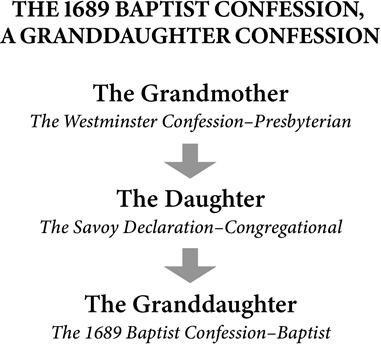
After the sixteenth century Reformation and Protestant break from Roman Catholicism, there was a period in which the doctrinal insights and advances of the Reformation were crystallized in the great Reformation confessions. Reformed Baptists like myself hold to one of those great Reformation confessions: the 1689 Baptist Confession of Faith.
This confession is the granddaughter, however, of the greatest and most well-known of all Reformation confessions, the Westminster Confession of Faith. This later confession was written by Presbyterians in the 1640s. It was adapted by the Congregationalist Puritans in The Savoy Declaration of Faith of 1658. The Savoy was in turn the mother of the 1689 Baptist Confession. The 1689 Baptist Confession was mainly an adaptation and alteration of the Savoy Declaration. Yet, it still closely resembles its grandmother, the Westminster Confession.
Though these three confessions differ from one another at various points, with regard to the subject of prophecy or eschatology, these three confessions are virtually identical. Thus, when I quote from chapters 31 and 32 of the 1689, the language is substantially identical to that of the other two confessions. There was no disagreement on the issue of what was core Christian truth about the future. These great Reformation confessions taught with one voice the bodily second coming of Christ and resurrection of the dead.
In chapter 31.2–3 of the 1689, it says this about the resurrection of the dead:
- At the last day, such of the saints as are found alive, shall not sleep, but be changed; and all the dead shall be raised up with the selfsame bodies, and none other; although with different qualities, which shall be united again to their souls forever.
- The bodies of the unjust shall, by the power of Christ, be raised to dishonour; the bodies of the just, by his Spirit, unto honour, and be made conformable to his own glorious body.
And in chapter 32.1–3 of the 1689, it states the following about Jesus’s second coming:
- God hath appointed a day wherein he will judge the world in righteousness, by Jesus Christ; to whom all power and judgment is given of the Father; in which day, not only the apostate angels shall be judged, but likewise all persons that have lived upon the earth shall appear before the tribunal of Christ, to give an account of their thoughts, words, and deeds, and to receive according to what they have done in the body, whether good or evil.
- The end of God’s appointing this day, is for the manifestation of the glory of his mercy, in the eternal salvation of the elect; and of his justice, in the eternal damnation of the reprobate, who are wicked and disobedient; for then shall the righteous go into everlasting life, and receive that fulness of joy and glory with everlasting rewards, in the presence of the Lord; but the wicked, who know not God, and obey not the gospel of Jesus Christ, shall be cast aside into everlasting torments, and punished with everlasting destruction, from the presence of the Lord, and from the glory of his power.
- As Christ would have us to be certainly persuaded that there shall be a day of judgment, both to deter all men from sin, and for the greater consolation of the godly in their adversity, so will he have the day unknown to men, that they may shake off all carnal security, and be always watchful, because they know not at what hour the Lord will come, and may ever be prepared to say, Come Lord Jesus; come quickly. Amen.
The Athanasian Creed
The so-called Athanasian Creed was probably neither a creed nor Athanasian. It was likely a hymn in the theological tradition of Augustine of Hippo. Yet, it came to have great influence in the Western church of the early Middle Ages primarily because of its witness to the full deity of Christ. But that was not all that it covered. It is representative of the views of the church during the Middle Ages, not only on the Trinity but also on the matters covered in paragraphs below.
- He ascended into heaven, He sits on the right hand of the Father, God, Almighty;
- From thence He shall come to judge the quick and the dead.
- At whose coming all men shall rise again with their bodies;
- and shall give account of their own works.
- And they that have done good shall go into life everlasting and they that have done evil into everlasting fire.
- This is the catholic faith, which except a man believe faithfully he cannot be saved.2
Clearly, the second coming of Christ and the bodily resurrection were seen as central and essential doctrines at that time.
The Apostles’ Creed
The so-called Apostles’ Creed was not written by the apostles of Christ. It was, however, the earliest written creed of the church and testifies to the state of Christian teaching in the second and third centuries. It affirms the second coming of Christ and the resurrection of the flesh.
- I believe in God the Father, Almighty, Maker of heaven and earth:
- And in Jesus Christ, his only begotten Son, our Lord:
- Who was conceived by the Holy Ghost, born of the Virgin Mary:
- Suffered under Pontius Pilate; was crucified, dead and buried: He descended into hell:
- The third day he rose again from the dead:
- He ascended into heaven, and sits at the right hand of God the Father Almighty:
- From thence he shall come to judge the quick and the dead:
- I believe in the Holy Ghost:
- I believe in the holy catholic church: the communion of saints:
- The forgiveness of sins:
- The resurrection of the body:
- And the life everlasting. Amen.
Conclusion
I have only cited these confessions and creeds of the church as witnesses to the central and foundational nature of the prophetic doctrines in question. You should realize, however, that in the entire history of the orthodox church there is no dissenting voice. No creed of the orthodox Christian church denies or casts doubt upon these doctrines. Wherever they are mentioned, they are affirmed, and affirmed as central and foundational.
Concluding Lessons
- First, we should not think that eschatology or prophecy is un- important and impractical. While not every matter over which men debate is equally central or important, eschatology itself (its core truth) is essential to the Christian faith.
- Second, we should learn that things having to do with the literal and the bodily are important for Christians. There is a kind of spirituality that is not Christian at all. Our bodies and our world are included in the redemption accomplished by Christ.
- Third, the bodily return to this world of the same Jesus who went into heaven and the bodily resurrection of the dead that leaves empty tombs are fundamental, central, and essential Christian doctrines. They are an essential part of the Christian faith.
- Fourth, eschatological viewpoints which deny these core truths in the language of the confession “evert” or overthrow the foun- dation of Christian doctrine.5 Such viewpoints are not inconse- quential doctrinal variants. They are not minor errors. They are heresy or damnable doctrine. Among such viewpoints must be classed the liberal viewpoints which turn the kingdom of God into an evolving ideal of a perfect human society. Liberalism often denies the supernatural altogether and, thus, the whole structure of biblical eschatology. Also deserving of this label is hyper-preterism which denies a future return of Christ and future resurrection of the very body that died.
- Fifth, we must be careful to avoid words and attitudes with those within the bounds of Christian orthodoxy that practically deny the special Christian love we owe to all believers. On the contrary, all that we say must be characterized by the moderation, kindness, respect, and love which we owe to other believers. This does not mean that we cannot say boldly what we think the Bible teaches. It does, however, mean that such boldness must be marked by the gentleness and respect that we owe to all men (1 Peter 3:15) and especially to believers (John 13:34–35).